Science
Phys.org·
Adult Acne Persists Beyond Teenage Years; Treatment Options Available
As a teenager, Gillian Maegan Montalbo's pimples weren't too bad—just a few bumps on her forehead and nose.
Evidence over alarm. Research over anecdote.
Genuinely interesting science stories — discoveries, research, and ideas worth knowing about.
As a teenager, Gillian Maegan Montalbo's pimples weren't too bad—just a few bumps on her forehead and nose.
(Peter Dazeley/The Image Bank/Getty Images) Two aging trends connected. ScienceAlert stories are written, fact-checked, and edited by humans, never generated by AI. Don't miss a story, subscribe here.
Nearly 300,000 people may live in areas at risk of flooding in the Nepalese, Indian and Chinese areas of the Himalayas. The results, from a study published in Scientific Reports, also indicate that the total area covered by buildings within potential flood zones increased by approximately 45% between 2016 and 2023.
Most of us recognize basic phases of matter and their properties: solids maintain their shape, liquids flow freely with constant volume, and gases expand to fill their container. Quantum phases, on the other hand, are much harder to categorize, overturning traditional notions of what a phase even is and forcing physicists to rethink their definitions.
Two cartoon characters appear on a screen. One belongs to a group of three, and the other to a group of two. Which character would you rather play with?
As part of the agency’s Inspiration Tour flyover, NASA Administrator Jared Isaacman will pilot one of three F-5 fighter jets to kick off the New York Jets vs. Cleveland Browns game in East Rutherford, New Jersey, on Sunday, Oct. 11. NASA team members will engage with fans at the agency’s Experience Zone, located at the […]
From coral reefs in Papua New Guinea to chimpanzees in West Africa, grizzly bears in Canada and albatross colonies off Tasmania, some ecosystems are thriving despite climate change, habitat loss and other environmental pressures.
  submitted by   /u/Confident_Salt_8108 [link]   [comments]
Powerful waves thrashed communities along California's southern coast Friday, damaging homes and sending water cascading through streets as residents braced for more potential damage wrought by Tropical Storm Rachel.
A magnitude 7.7 earthquake jolted Panama on Friday, setting off panic in the capital city and warnings of dangerous tsunami waves.
"In an interview with Fox News that aired Wednesday evening, Bezos told host Bret Baier he believes AI’s productivity gains could let some people decide, “I can support my family by working three days a week. He claimed families in two-earner households could decide they don’t need a second income and let one worker drop out. The billionaire didn’t offer any specifics on how this could happen. " Wow. That is some epic Marie-Antoinette level trolling. Though in fairness to Marie-Antoine
Isaias weakened from a hurricane to a post-tropical cyclone early Saturday after it made landfall in northwestern Florida, where it lashed the U.S. Gulf Coast with heavy rain and strong winds, the National Hurricane Center (NHC) said.
Some insects, including honeybees and ants, live in highly organized colonies where individuals take on specific roles. In many ant societies, young adult workers typically care for developing young inside the nest before beginning to forage, or search for food, outside it. Some ant species, however, start hunting for food as soon as they reach adulthood, without undergoing a transition period.
Oxidative coupling of methane (OCM) is a chemical reaction that directly converts methane and oxygen, the main components of natural gas, into higher-value hydrocarbons such as ethane and ethylene. However, the reaction presents a fundamental selectivity challenge.
The researchers moved a diamond in a graphite plate. (Cassondra George/OIST) This is (relatively) huge. ScienceAlert stories are written, fact-checked, and edited by humans, never generated by AI. Don't miss a story, subscribe here.
The largest city in the Brazilian Amazon, Manaus, closed public schools on Friday as smoke from hundreds of wildfires blanketed the metropolis amid an intensifying El Niño event.
  submitted by   /u/Confident_Salt_8108 [link]   [comments]
 Science
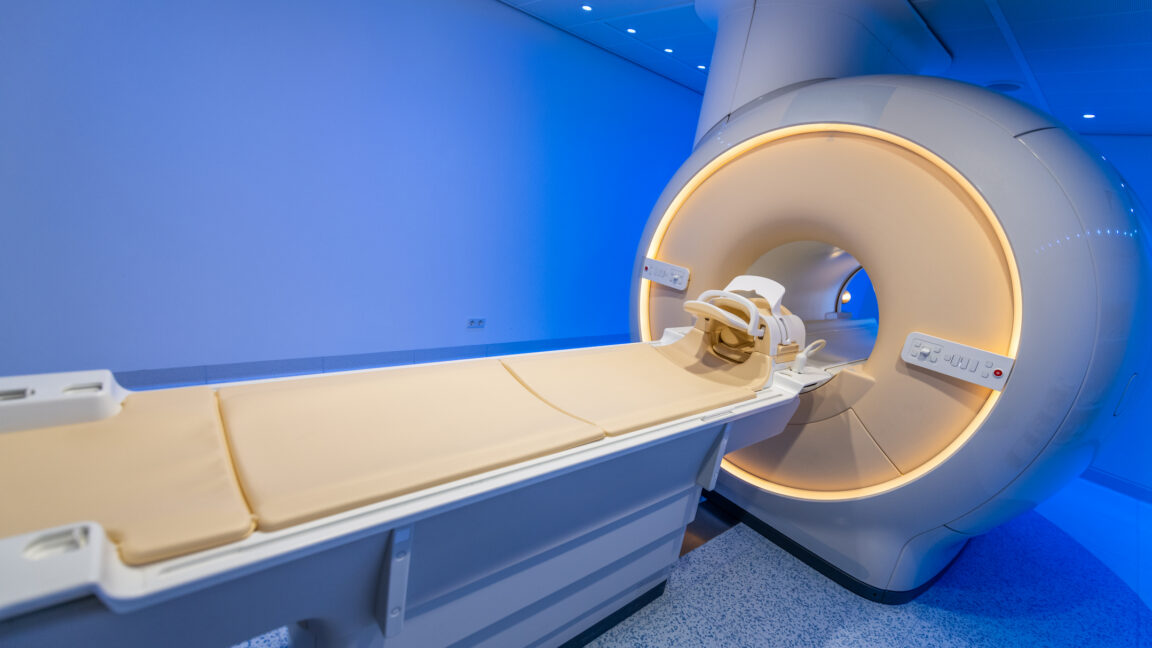
Participants meditated inside an MRI tube, with and without psilocybin.
Physicists in the Department of Physics at the University of Oxford have used a hybrid quantum computer, made up of qubits and quantum oscillators, to observe the Aharonov–Bohm effect in a quantum simulation. The effect is a quantum phenomenon in which a particle can acquire a measurable phase by traveling around a magnetic flux, even though it never passes through a region where a magnetic field is present.
(Paul Hudson/Flickr/CC BY-NC-ND 2.0) Including an actual wooden club. ScienceAlert stories are written, fact-checked, and edited by humans, never generated by AI. Don't miss a story, subscribe here.
I’ve been thinking about this a lot recently. AI is getting better so fast that sometimes I wonder if our ability to actually learn and adapt can keep up with it. Take coding for example. Before AI, if you wanted to build something, you usually had to struggle through a lot of stuff yourself. You wrote code, broke things, read logs, searched Stack Overflow, spent hours debugging some stupid bug, and slowly figured out how the whole system worked. It was slow and painful, but I think that process
  submitted by   /u/Confident_Salt_8108 [link]   [comments]
The billable hour is central to the business model of many law firms, but AI means the economics are no longer so straightforward.   submitted by   /u/Gari_305 [link]   [comments]
(Alexandra C. Ribeiro/fStop/Getty Images) All the sweetness, no downsides? ScienceAlert stories are written, fact-checked, and edited by humans, never generated by AI. Don't miss a story, subscribe here.
Top executives at Anthropic, OpenAI and other AI companies are privately gaming out scenarios for a public and political revolt after a catastrophic AI event.   submitted by   /u/Gari_305 [link]   [comments]
Careers upended overnight, academics will have to separate solutions from slop while OpenAI moves on.   submitted by   /u/Gari_305 [link]   [comments]
A recent report on cyberattacks against South Korean financial institutions described an attacker using a Chinese AI penetration-testing tool alongside other AI systems. The investigation is ongoing, and the available reporting does not establish that any company or government directed the attacks. What caught my attention was the chain: AI capabilities can be copied, distilled into smaller models, combined with other tools, and used far from where they were developed. A model may pass on what i
  submitted by   /u/iwantboringtimes [link]   [comments]
  submitted by   /u/Confident_Salt_8108 [link]   [comments]
(Ed Reschke/Stone RF/Getty Images) "Cells from the ovary's nervous system appeared to be particularly sensitive." ScienceAlert stories are written, fact-checked, and edited by humans, never generated by AI. Don't miss a story, subscribe here.